How Sustainable Is Farmed Caviar? Aquaculture in Austria Explained
An honest starting point: caviar from wild sturgeon is not a sustainable product. Most sturgeon species are critically endangered, and international trade is strictly regulated under CITES. That caviar exists at all today is thanks to aquaculture. The real question is not whether farmed - it is how.
Why farming saved caviar
For over a century, wild populations in the Caspian and Black Sea were fished towards collapse. Modern legal caviar comes almost exclusively from farms, which removes the pressure from wild stocks. But "farmed" alone says nothing about quality of life for the fish or impact on the environment - that depends entirely on how a farm operates.
What our Austrian production does differently
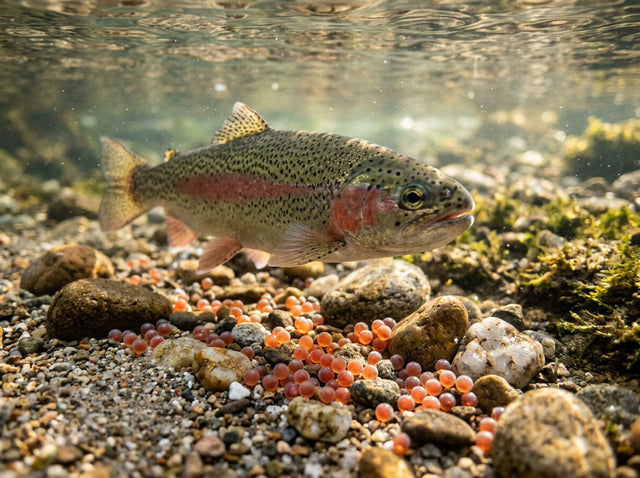
Our sturgeon and trout are raised in cold, mineral-rich alpine spring water - naturally filtered, without artificial treatment. Water quality is the single biggest factor in fish welfare, and it is the one thing that cannot be faked. The production relationship behind our caviar has been held and shaped since 1994: three decades of refining stocking density, feeding and handling under strict Austrian standards.
No stockpiling, no waste
We harvest weekly, to demand - never for a warehouse. No frozen reserves, no long-term stock, no product produced to be discarded. It is a slower way to run a caviar business, and the reason every tin is current-season. Sustainability and freshness turn out to be the same decision.
What this means for you
Full traceability down to the harvest week, roe from fish raised in the water they were meant for, and a product whose supply chain you can actually question - we answer the most common points in our FAQ. Sustainable caviar is not a marketing claim; it is a set of daily operational choices. We are happy to be measured against ours.